
Earthing resistance testing in Karachi
Measure it, record it, improve it. We test earth electrodes and earthing systems and give you recorded results you can rely on.
Why test earthing at all?
An earth electrode that looks fine can still perform poorly. Soil dries out, joints corrode, cables are damaged during other work, and sites change. The only way to know how your earthing is performing is to measure it.
Our earthing resistance testing and earth pit testing service checks electrodes and connections and records the results, whether the earthing is new, existing, or of unknown condition.
Testing is useful for solar systems, factories, commercial buildings, hospitals, schools and telecom or IT sites alike.
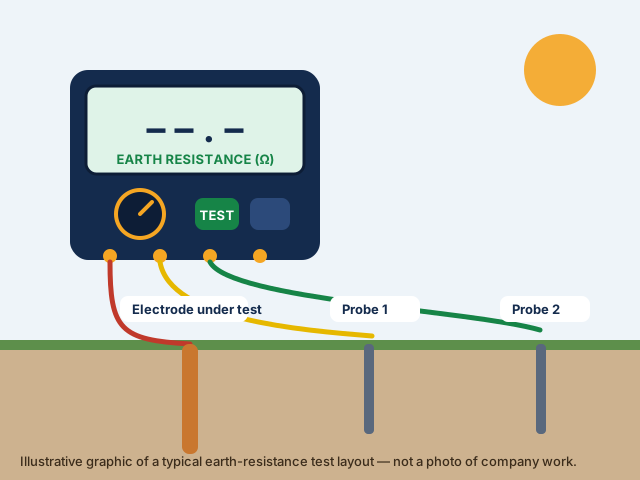
What happens during an earthing test
Inspect
Visual check of electrodes, test points, connections and conductors.
Prepare
Identify the points to be tested and agree access with you.
Measure
Measure earth resistance using suitable test equipment and an appropriate method for the site.
Record
Write down each reading with location, date and relevant conditions.
Advise
Explain what the readings mean and recommend improvements where needed.
What the recorded results include
- Site name and test location for each point
- Date of testing and notes on soil or weather conditions
- Measured resistance for each tested electrode or system
- Observations on connections, access and condition
- Improvement guidance where the findings call for it
About target values: acceptable earth resistance depends on the installation and the standards or requirements that apply. We confirm the relevant requirement during assessment, and we do not guess it.
When to arrange testing
- After a new earthing installation or solar system is completed
- Before commissioning or handing over a building or plant
- After modifications, extensions or ground works
- After an electrical fault, or if equipment behaves unexpectedly
- As part of regular maintenance, at intervals suitable for your facility
- When existing earthing has never been measured
Earthing testing FAQ
What is an earth pit test?
An earth pit test measures the resistance between an earth electrode and the general mass of earth. It tells you how effectively that electrode connects to the ground at the time of testing.
What resistance value is acceptable?
It depends on the type of installation and the standards or requirements that apply to it. We identify the relevant requirement during the assessment and compare your readings against it.
How often should earthing be tested?
Common occasions are after installation, after changes to the site or equipment, after a fault, and at regular intervals agreed for your facility. Soil conditions change with the seasons, so recorded results from different times are useful.
What do I receive after testing?
Recorded results listing each tested point, its reading, date and conditions, along with our observations and improvement guidance where needed.
Related: solar earthing · industrial earthing · our process
Find out how your earthing is performing
Request resistance testing for a new installation or for earthing that has never been measured.