Solar earthing in Karachi
Safe, properly bonded earthing for rooftop and ground-mounted solar systems, planned for your site and verified by measurement.
Why solar earthing deserves attention
A solar installation is more than panels on a roof. It is a collection of metal frames, structures, cables, inverters and distribution equipment, often exposed to heat, dust, humidity and the weather. Without sound earthing and bonding, a fault in any of these parts can leave metalwork energised.
Solar earthing connects those parts to the ground in a controlled way. It supports the operation of protective devices and helps keep the installation safe for the people who live or work beside it. The correct arrangement depends on the system design, the site and the standards or utility requirements that apply.
We handle solar panel earthing for new systems and can inspect and test earthing on systems that are already running.
Parts of a solar system we consider
Array and structure
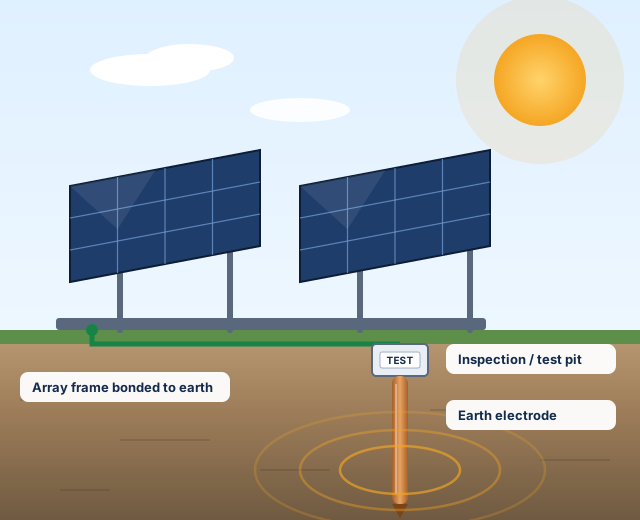
Module frames, rails and mounting structures, and how they are bonded together along the array.
Inverters and DC equipment
Inverter enclosures, combiner or junction boxes and any other metal equipment on the DC side.
AC distribution
Distribution boards, metering and the connection to the building's existing earthing system.
Cable routes
Metal trays, conduits and glands that should be considered as part of the bonding scheme.
Electrode location
Where an electrode can be placed, ground conditions, access for future testing, and protection from damage.
Existing earthing
Whether the site already has earthing that can be tested and, if suitable, connected to.
Rooftop and ground-mounted systems
Rooftop systems
Homes, shops and commercial buildings often have limited space and mixed existing wiring. We check how the array frames, inverter and distribution board connect to the building's earthing and where a suitable electrode can be installed.
Ground-mounted systems
Larger arrays spread across open land need careful planning of bonding routes and electrode positions. We consider layout, access and ground conditions across the area.
What you get
- A site inspection and clear assessment of what the installation needs
- A planned electrode layout and conductor route, with test points
- Materials selected for your site and application
- Professional installation by technicians using suitable PPE
- Resistance testing after installation
- Recorded results and improvement guidance if readings call for it
Read the full process or learn about our earthing testing.
Solar earthing FAQ
Why does a solar system need earthing?
Solar systems contain metal frames, mounting structures and electrical equipment that can become live in a fault. Earthing and bonding give fault current a safe path and keep exposed metal parts at a similar potential.
Do you earth both rooftop and ground-mounted solar?
Yes. Rooftop and ground-mounted systems have different layouts and constraints, so we assess each one on site before recommending an arrangement.
Is earthing the same as lightning protection or surge protection?
No. They are related but separate topics. Earthing provides the reference to ground. Whether your site also needs lightning or surge protection depends on the installation, and we are happy to discuss it during the assessment.
Can you test the earthing of an existing solar system?
Yes. We can inspect the existing earthing, measure resistance and provide recorded results with improvement guidance if needed.
Planning or running a solar system?
Send us your location and system details for a solar earthing quote or an inspection of your existing earthing.